Waka Hauora + University of Otago
Waka Hauora
Waka Hauora + University of Otago
Waka Hauora
Hope and support for life beyond opioids.
Waka Hauora offers hope and support for the safe use of opioid medication for people living with chronic pain in Aotearoa — a co-designed service built by Tangerine Design and Wild Interactive together, alongside the University of Otago and the clinicians leading the intervention.
New Zealanders live with chronic pain.
Lived-experience pūrākau, each uniquely authored.
Logins — people, whānau and clinicians in one service.
Accessible colour streams, all WCAG 2.1 AA.
Tertiary pain services and primary-care practices in the trial.
A University of Otago research project.
Chronic pain is the most prescribed condition we don’t talk about.
One in five New Zealanders lives with chronic pain. Opioids help in the short term, but long-term use carries real risk — and tapering is hard for patients and clinicians alike.
Long-term use for non-cancer pain remains under-researched, with significant inequities for Māori. Stories are simple but powerful tools for changing health behaviour — and pūrākau are a culturally appropriate way to carry them.
A co-designed service, built in partnership.
Co-design from the start
Shape the service with whānau and clinicians, not for them.
A kaupapa-Māori identity
A culturally grounded identity with a clear narrative woven through every touchpoint.
A secure login
Clinician login and patient enrolment a small research team can run.
Accessibility & privacy
By design, not as an afterthought.
Whakamana
Everyone is valued, all opinions are worthy, let's aim for equity.
Āhurutanga
A safe space that is mana-enhancing, strengths-based, upholding and uplifting everyone.
Manaakitanga
Self-awareness, self-reflection, aroha, humility, creating an environment that enables everyone to contribute.
Hikitia ngā tangata kato
Honesty, transparency and goal-driven.
Katakata is medicine in what we do!
The waka tells the story of finding your why.
Ten pūrākau that carry hope.
Ten lived-experience stories, each uniquely authored — with plain-language guides beside them.
The ten video pūrākau remain private while the service is in clinical testing.
Three logins. Three perspectives.
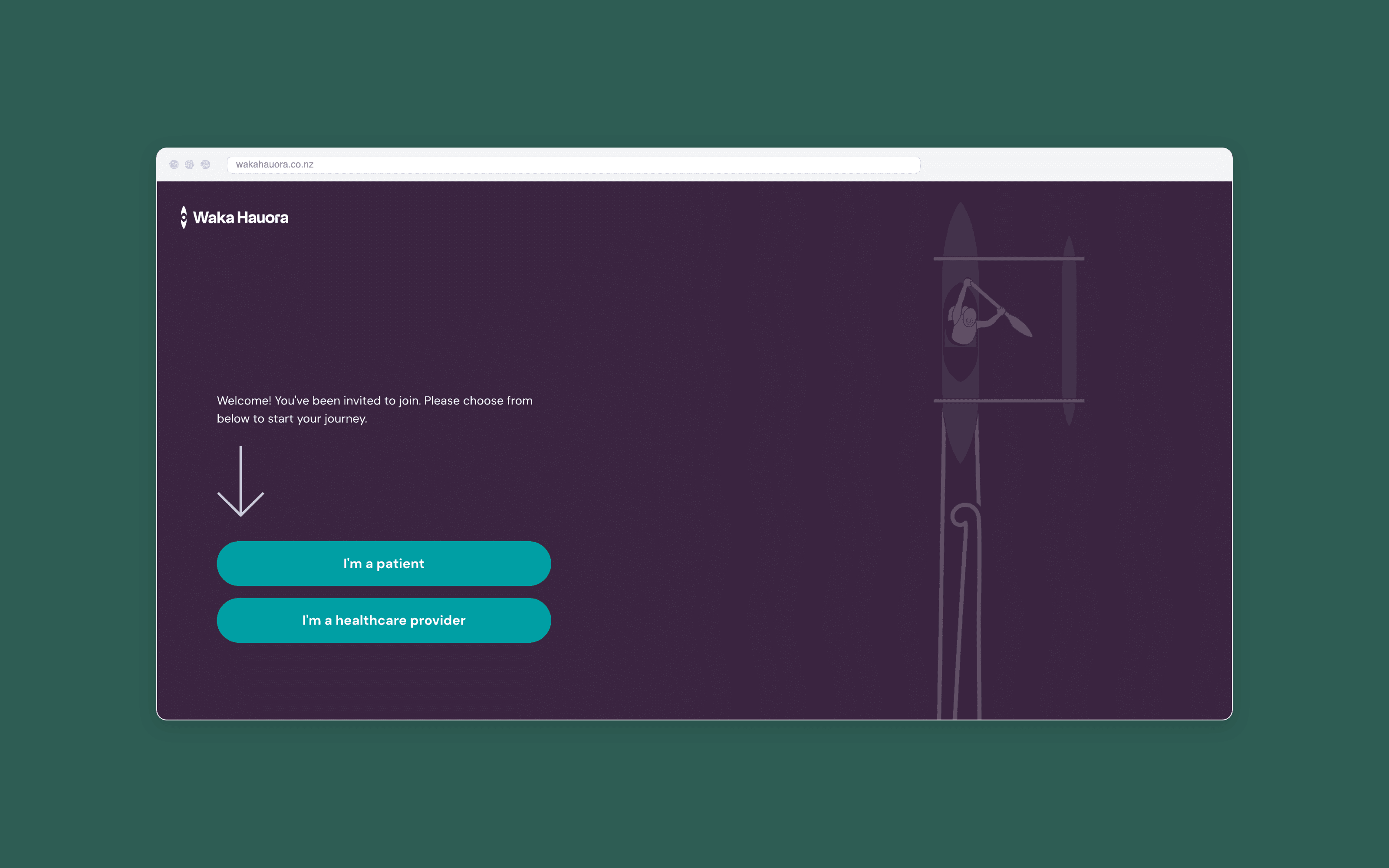
Switch a perspective to see what each login opens onto.
Real lived-experience stories carry the message that a journey beyond opioids is possible.
More than a website. The platform captures how people engage with it, feeding the University of Otago’s clinical evaluation.
A live service in clinicians' hands
Waka Hauora is live and in testing across four tertiary pain services and four primary-care practices — a real intervention, not a concept.
Hope, told by the people who lived it
Ten uniquely authored pūrākau carry the message that a journey beyond opioids is possible — inside a kaupapa-Māori identity whānau recognise as theirs.
A platform built for evidence
Patient, whānau and clinician journeys are tracked apart, giving the University of Otago the data to evaluate whether stories change opioid-reduction journeys.
“Even when our patients feel alone, they have their tūpuna beside them.”
— from the co-design kōrero that shaped the whānau pathway