Online Republic · Webjet Group
Airport Rentals
Online Republic · Webjet Group
Airport Rentals
The rental app, rebuilt mid-flight.
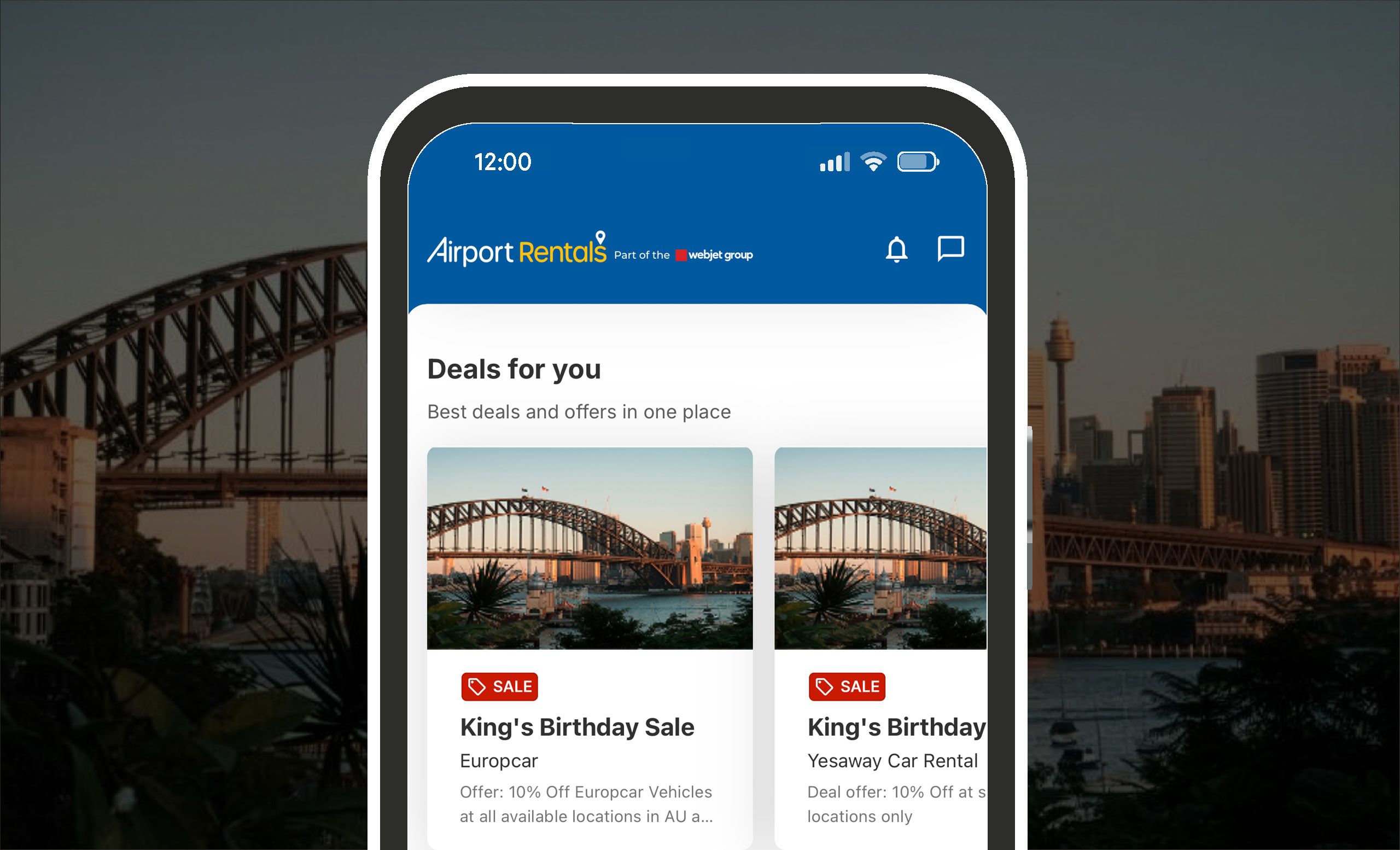
A React Native rebuild of the Airport Rentals app — Wild embedded as dev partners in GCD's team for Online Republic, a Webjet Group company — shipping release after release to both stores while travellers kept booking underneath.
Current version, live in the App Store and Google Play.
Platforms shipped from a single codebase — iOS and Android.
Production builds shipped this cycle — iOS 246 through 261.
Vehicle benefits fully API-driven — nothing hardcoded in the app.
Megabytes per build upload, after untracking stale artifacts.
Shared booking platform behind app and web — same API, same source of truth.
Rebuilt in production — with travellers booking underneath.
Airport Rentals helps travellers search, compare and book rental cars — and its ageing app needed a modern foundation without ever going dark.
The rebuild had to land on the same shared booking platform as the website, keep real bookings flowing through every release, and pass the client’s own QA — all from a single codebase serving both app stores.
A modern stack that ships like clockwork.
Everything in the build exists to make the next release safer and faster than the last.
Shipped, tested, and tested again
Real fixes from real client QA, release after releaseLive in both stores
A React Native rebuild shipping continuously to the App Store and Google Play — version 3.9.25 and counting, with users on it the whole way through.
One codebase, two platforms
Expo + TypeScript strict replaces platform-specific maintenance — one team, one codebase, both stores.
Release as routine
EAS automation with auto-incrementing builds and Sentry monitoring — fifteen-plus production builds shipped this cycle without drama.
Content without releases
Vehicle benefits and rental content fully API-driven, so the client updates the app experience without waiting on a store review.
A rebuild only counts when it ships — release after release, in both stores.